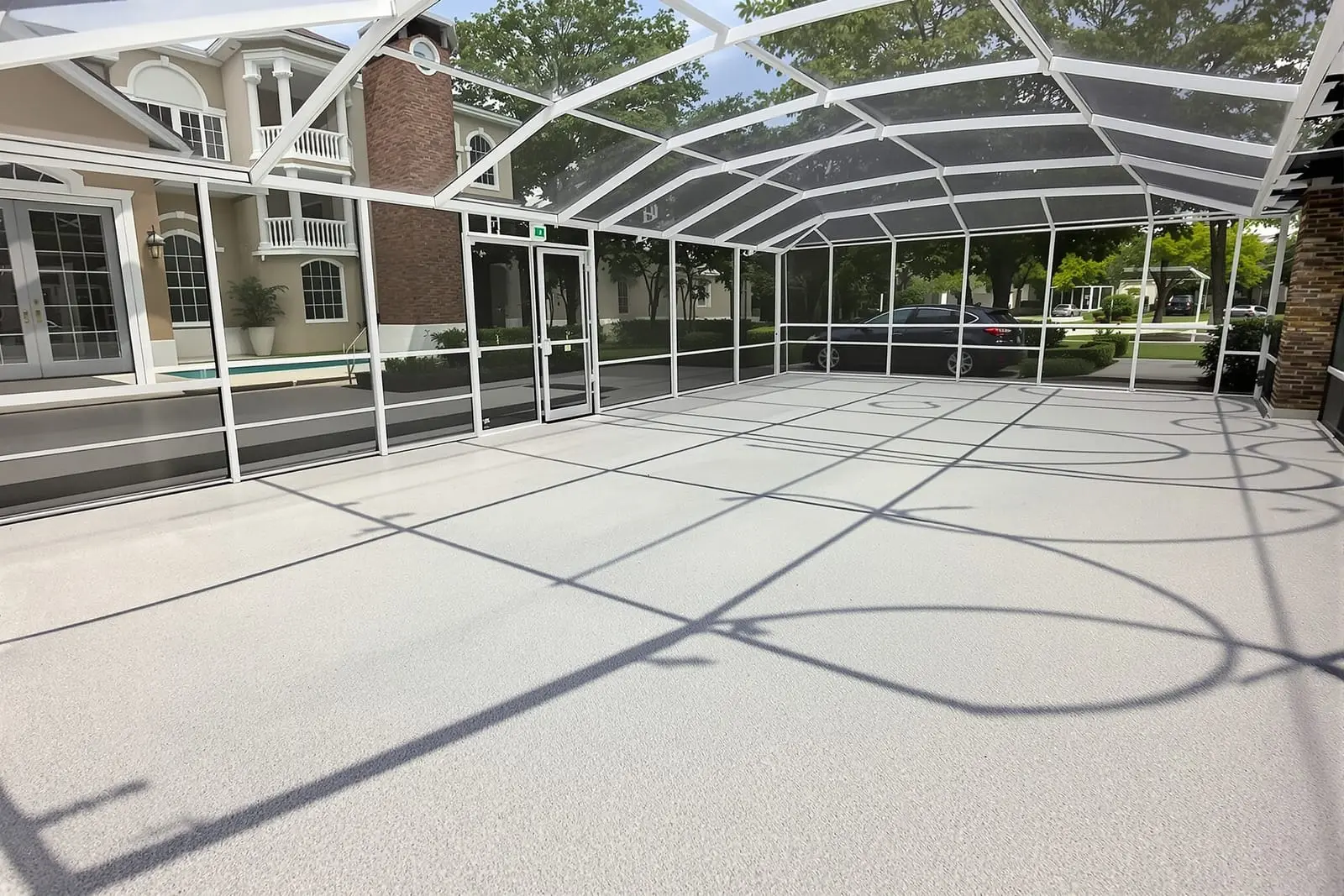
Vista Screens Gainesville offers complete pool cage rescreening in Gainesville, FL for aging or storm damaged enclosures.
Vista Screens Gainesville offers complete pool cage rescreening in Gainesville, FL for aging or storm damaged enclosures. We remove old, brittle mesh and install new high strength screen panels that restore a clean, open look. Our team checks fasteners, doors, and structural connections during rescreening. Refresh your outdoor space with tight, reliable screens around your pool.
Vista Screens Gainesville provides professional pool cage rescreening throughout Gainesville, FL and the surrounding area. Our licensed, insured crew delivers safe, clean, on-time work with a free estimate before anything begins. Call (352) 641-3916 or request your free quote.

Around Gainesville, pool cages take a beating from sun, storms, pollen, and bugs. After a few years, screens start to sag, tear, or turn cloudy. Pool cage rescreening is the process of stripping out the old screen fabric and spline, checking your aluminum frame, then installing new screening that fits tight and looks clean.
At Vista Screens Gainesville, we focus specifically on the way North Florida weather treats pool enclosures. We see a lot of damage from summer thunderstorms, oak and pine debris, and long term UV exposure. Instead of just patching holes, we look at the enclosure as a whole: how the panels are tensioned, where wind tends to push the hardest, and whether your doors and hardware still close smoothly.
If you are not sure you need a full rescreen, we can walk the cage with you and point out where the mesh is near the end of its life. Look for brittle corners, frayed edges at the spline, loose panels that move in the breeze, or screens that look gray instead of black. When most of the cage looks like that, full pool cage rescreening is usually more cost effective than constant repairs.
A proper rescreen is more than just pulling out old mesh and stapling in new. Here is how Vista Screens Gainesville handles a typical pool cage rescreening in the Gainesville area.
1. On site inspection and measuring We start with a full walk around of the enclosure. We check panel sizes, frame condition, door alignment, and the gutter connection if the cage is attached to the house roof. We note any bent members, loose fasteners, or corrosion that needs attention while the screens are out.
2. Project planning and material choices We confirm what type of screen you want (standard, no see um, or upgraded long life material) and whether you want any special panels, such as privacy screen near neighbors or pet resistant panels at the bottom. We also talk about scheduling around your pool use and weather, since rescreening is best done in dry conditions.
3. Removing old spline and screen panels Our crew removes the old spline with specialty rollers and hand tools so we do not damage the aluminum channels. Large roof panels are dropped out carefully so we avoid twisting the frame. We bag all old screen and spline to keep debris out of the pool and yard.
4. Frame inspection and minor repairs With the screens out, we can see every joint and screw. This is when we tighten loose fasteners, replace rusted tapcons at the base, and re secure any loose kick plates or chair rails. If we notice structural problems, we talk with you before moving forward.
5. Cutting and installing new screen We cut each piece of screen slightly oversize on site, then install it using new UV resistant spline. Each panel is tensioned evenly from the center outward so it sits tight without over stretching. Roof panels are installed with extra attention to alignment, since that is where wind pressure is strongest.
6. Cleanup and walkthrough We blow or vacuum any loose spline pieces, remove every scrap of old screen, and wipe down door tracks. Before we leave, we walk the cage with you, check doors and latches, and look at the panels from inside and outside to catch any ripples or loose spots.
Not every pool cage needs the same type of screen. In Gainesville, different yards have different priorities. Vista Screens Gainesville will explain the tradeoffs clearly so you can choose what actually fits your pool and budget.
Standard fiberglass screen This is the most common option and works well for many enclosures. It keeps out most insects, lets plenty of air through, and is cost effective. It does fine with typical Gainesville wind and rain, especially when the frame is in good shape. Expect a reasonable lifespan if your cage does not get hit hard by tree debris.
No see um (tight weave) screen Near Payne's Prairie, around wooded lots, and in lower lying areas, customers often want more protection from tiny insects. No see um screen has a tighter weave that blocks smaller bugs, at the cost of slightly less airflow and a bit more resistance to wind. It is popular for those who sit outside at dusk or have sensitive skin.
Upgraded long life and pet resistant screens If your enclosure is directly exposed to sun all day or your pets push against the lower panels, you may want heavier duty screen. These materials resist tearing and UV breakdown better than standard mesh. They cost more up front, but they can delay your next rescreen by several years, which often makes sense in full sun Gainesville backyards.
Privacy and specialty panels For side yards close to a neighbor or a street, we can install privacy screen in just the lower panels or along one wall. That lets you enjoy your pool without feeling like you are on display. We can also mix materials, for example standard screen in the roof and no see um screen in the wall panels where mosquitoes are the biggest problem.
Customers often ask why quotes for pool cage rescreening can be so different. Vista Screens Gainesville is upfront about what usually drives the price, so you can compare bids fairly.
Size and height of the enclosure A small, low enclosure over a plunge pool costs much less than a large, two story cage with steep roof panels. Tall cages require more labor, additional safety equipment, and more material. Roof panels are the most labor intensive part of a rescreen.
Type of screen material Standard screen is the least expensive, no see um costs more due to the tighter weave, and long life or pet resistant screens are at the top of the range. Since material is bought by the roll, a big enclosure magnifies the price difference between options.
Frame condition and needed repairs If your aluminum frame is straight and solid, rescreening is straightforward. If there are bent beams, loose base anchors, or corrosion where the cage meets the slab or roof, we have to address that. Some items are simple, like replacing a few fasteners. Others, like straightening a twisted member, take more time and may require extra hardware.
Access and debris Enclosures that are very close to fences, trees, or steep slopes can take longer, simply because maneuvering ladders and handling large roof panels is trickier. Heavy overhanging oaks, common in older Gainesville neighborhoods, often mean more cleanup and a bit more care when reinstalling roof sections.
Weather and scheduling We try to schedule work when there is a low chance of storms so we are not starting and stopping repeatedly. Sudden storms are part of life in Alachua County, and if we need extra trips or have to protect an open cage from wind driven debris, that can affect the final labor time.
Before you say yes to any pool cage rescreening proposal, there are a few local factors to consider. Vista Screens Gainesville walks through these on every estimate so you feel prepared.
Check tree coverage and roof runoff If you have large trees dropping acorns or limbs on the cage, tell us about past damage. We can sometimes suggest heavier screen on the roof or adjust how panels are tensioned. For cages tied into the home roof, we also look at gutter flow so heavy Gainesville rains do not overload the top panels.
Think about how you use the space If you mostly swim during the day, standard screen might be fine. If evenings on the patio are your main use, no see um mesh may be worth it to cut down on gnats and tiny mosquitoes. Pet owners often choose stronger screen in the lower 3 feet where dogs lean or jump.
Ask about permits and insurance For a straightforward rescreen, permits are typically not required in Gainesville, but any structural changes can be a different story. Make sure whoever you hire has liability coverage and is comfortable working on tall cages. We are happy to provide documentation and explain what is and is not included.
Plan around pool care During rescreening, we try to keep debris out of the pool, but a few bits of spline or screen can still find their way in. It helps to schedule a filter cleaning or routine service after the work is done. If you have an automatic cleaner, we may ask you to turn it off for the duration of the project.
Get a detailed written quote A good quote should list the type and brand of screen, whether all panels or only selected ones are being replaced, how door hardware will be handled, and what kind of frame repairs are included. When Vista Screens Gainesville provides an estimate, we spell all of that out so there are no surprises later.
Professional pool cage rescreening, done right the first time, quality materials, honest pricing, and results that last.Vista Screens Gainesville